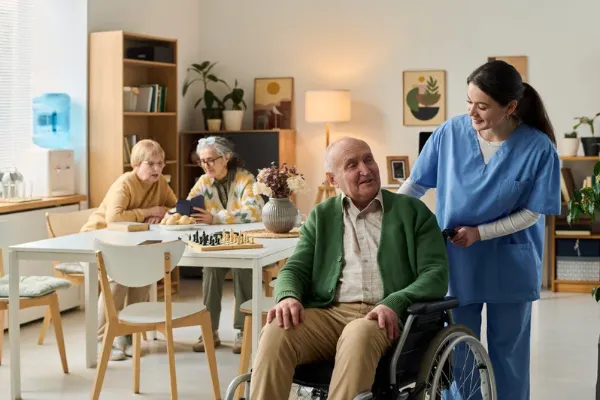
10 Trends Shaping the Future of Assisted Living
10 Trends Shaping the Future of Assisted Living: Technology, Changing Care Needs, and the Growing Demand for Senior Care
The assisted living industry is entering a period of significant change.
Across the world, people are living longer, family structures are evolving, and the demand for senior care is increasing. At the same time, assisted living communities are navigating workforce shortages, rising care needs, affordability concerns, and growing expectations from residents and their families.
Technology is also changing how senior care is delivered. Artificial intelligence, smart safety devices, digital health records, and connected care platforms are creating new opportunities to improve communication, safety, and operational efficiency.
However, the future of assisted living is not simply about adopting new technology or building more communities. It is about finding sustainable ways to provide appropriate care while preserving residents' dignity, independence, comfort, and quality of life.
Here are ten important trends shaping the future of assisted living.
1. The Rapidly Aging Global Population Is Increasing Demand for Senior Care
One of the biggest forces influencing assisted living is the aging global population.
People are living longer due to improvements in healthcare, living conditions, and medical treatments. However, longer life expectancy also means more people may eventually need assistance with daily activities, health management, mobility, or social support.
According to the United Nations, the global population aged 65 and older is projected to reach approximately 2.2 billion by the late 2070s. This demographic shift will place greater importance on long-term care, senior housing, healthcare services, and community-based support.
This growth is not happening at the same pace everywhere. Some countries are aging rapidly, while others are preparing for major demographic changes in the coming decades.
For assisted living providers, this creates both an opportunity and a responsibility. Communities must consider how they can meet increasing demand without compromising the quality of care.
The challenge is not simply accommodating more residents. It is understanding the different levels of support older adults may need and ensuring that services are appropriate for each individual.
2. AI and Smart Safety Technology Are Changing Daily Care
Technology is becoming a more important part of assisted living operations.
Artificial intelligence, smart sensors, wearable devices, and automated monitoring tools are helping communities explore new ways to support resident safety and improve daily workflows.
Examples include:
Fall detection systems: Devices that can identify potential falls and alert designated staff.
Smart motion sensors: Tools that can help identify unusual movement patterns or changes in daily routines.
Wearable health devices: Technology that can monitor selected health indicators, depending on the device and its capabilities.
AI-assisted documentation: Tools that may help organize records, summarize information, and reduce repetitive administrative work.
Smart medication reminders: Systems that can support medication routines and alert staff or residents when assistance may be needed.
These technologies can help caregivers receive information more efficiently and respond to certain situations more quickly.
However, technology should support human care, not replace it.
Assisted living communities must consider privacy, consent, cybersecurity, accuracy, staff training, and the risk of over-relying on automated alerts.
The goal should be to use technology responsibly while preserving the personal attention and human connection residents deserve.
3. Memory Care and Higher-Acuity Support Are Becoming More Important
Another major development is the increasing complexity of resident care needs.
Many assisted living communities are supporting older adults who need more than occasional help with everyday activities. Some residents may be living with dementia, mobility limitations, chronic health conditions, or other challenges requiring more specialized support.
AARP's May 2026 report on assisted living found that approximately 44% of assisted living residents had an Alzheimer's or dementia diagnosis. This highlights the importance of appropriate memory care services, staff preparation, and resident safety.
As resident acuity increases, communities may need to review:
Staff training and dementia-care knowledge.
Individualized care planning.
Medication support procedures.
Safety and supervision practices.
Coordination with healthcare professionals.
Appropriate staffing levels and skill mix.
Not every assisted living community is equipped to provide every level of care. Families should ask about a community's capabilities, services, staffing, and policies before making a decision.
The future of assisted living will require a clearer understanding of the difference between general assistance, specialized memory care, and services that may require a higher level of medical support.
4. Resort-Style and Luxury Living Are Changing Resident Expectations
Assisted living is increasingly being discussed as more than a place where older adults receive help with daily activities.
Some communities are placing greater emphasis on lifestyle, comfort, hospitality, and personalized experiences.
Depending on the community and its resources, features may include:
Restaurant-style dining.
Fitness and wellness programs.
Beauty salons and personal-care services.
Outdoor gardens and recreational spaces.
Organized social activities.
Comfortable private accommodations.
Transportation and planned outings.
These features reflect a growing interest in environments where residents can continue enjoying meaningful experiences while receiving the support they need.
However, luxury amenities are not the same as quality care.
A beautiful building does not automatically mean residents receive attentive support, qualified assistance, or a safe environment.
Families should look beyond appearances and consider staffing, care planning, safety procedures, resident engagement, and the overall quality of daily services.
The challenge for the industry is finding ways to create welcoming, comfortable environments without losing sight of the primary purpose of assisted living: supporting residents' well-being.
5. Unified Care Platforms Are Helping Communities Coordinate Information
Assisted living communities often manage a large amount of information.
Resident records, medication information, care plans, staff schedules, incident reports, family communications, and operational documents all need to be organized and accessible to the appropriate people.
When these systems operate separately, staff may spend unnecessary time searching for information or entering the same details in multiple places.
Unified care platforms aim to bring different operational and care-related functions into a more connected environment.
Depending on the system, these platforms may support:
Resident information and care documentation.
Staff scheduling and communication.
Medication management workflows.
Incident reporting.
Family updates and communication.
Operational reporting and analytics.
Better coordination can help reduce administrative friction and support more consistent information-sharing.
However, integrating technology is not always simple. Communities must consider whether systems work together, whether information is accurate, and whether staff can use the tools confidently.
The objective is not to collect more data for its own sake. It is to make important information easier to use when supporting residents.
6. Addressing the Staffing Crisis Requires More Than Hiring
Workforce shortages remain one of the most significant challenges facing senior care.
Caregivers perform essential work, often under demanding conditions. Communities must balance resident needs with staff availability, training requirements, scheduling, retention, and operational costs.
The challenge becomes even greater when residents require more assistance than they did previously.
A September 2026 senior living industry report from Sage, based on a survey of 510 professionals, found that 81% of surveyed executives said resident acuity had increased. The report also highlighted the pressure frontline teams experience when staffing levels do not consistently meet care demands.
Addressing the staffing challenge requires more than recruiting additional employees.
Communities should also consider:
Competitive compensation and benefits.
Ongoing training and professional development.
Supportive leadership and workplace culture.
More effective scheduling practices.
Clear communication between shifts.
Employee recognition and retention.
Technology that reduces unnecessary administrative work.
Automation may help with repetitive tasks, but it cannot replace the empathy, judgment, and personal connection involved in caregiving.
Investing in the people who provide care is essential to creating a sustainable senior living environment.
7. Asia-Pacific Is Becoming an Important Region for Senior Care Growth
Population aging is a global issue, but the Asia-Pacific region deserves particular attention.
Countries across the region are experiencing demographic changes, including longer life expectancy, lower birth rates, and smaller family sizes.
According to the United Nations Population Fund, one in four people in Asia and the Pacific could be aged 60 or older by 2050, compared with 14.3% in 2022.
This shift is creating greater demand for long-term care services, age-friendly housing, healthcare support, and community-based care options.
The region also has different cultural and family expectations surrounding aging.
In some communities, family caregiving remains the primary approach. In others, changing work patterns, migration, urbanization, and smaller households are making traditional caregiving arrangements more difficult.
This creates opportunities to explore different care models, including home-based support, community services, residential care, and assisted living.
However, growth will depend on more than demand. Countries will need appropriate policies, trained workers, funding models, infrastructure, and standards that protect older adults.
The future of senior care in Asia-Pacific will likely involve a combination of family support, professional services, and technology.
8. Aging in Place Is Changing How Families Think About Care
Not every older adult wants to move into an assisted living community.
Many prefer to remain in their own homes for as long as possible. This is commonly referred to as aging in place.
Aging in place can involve modifying a home, arranging transportation, receiving help with daily activities, using remote monitoring devices, and coordinating home-based care.
Some practical examples include:
Installing grab bars and improving bathroom accessibility.
Removing trip hazards and improving lighting.
Arranging meal delivery or household assistance.
Using medication reminders and emergency alert devices.
Scheduling home health or personal care services when appropriate.
For some individuals, these adjustments may provide the support they need while allowing them to remain in familiar surroundings.
For others, their care needs may eventually become too complex for a home-based arrangement.
Assisted living should therefore be viewed as one option within a broader continuum of care rather than the automatic next step for every older adult.
Families should evaluate safety, support needs, personal preferences, available services, and long-term costs when considering their options.
9. Sustainability and Affordability Are Becoming Important Industry Considerations
Assisted living communities must consider both environmental responsibility and financial sustainability.
On the environmental side, some senior living operators are exploring energy-efficient lighting, improved insulation, water-saving systems, sustainable materials, and waste-reduction practices.
These measures can potentially reduce environmental impact and help manage long-term operating expenses.
Sustainability also involves creating buildings that are practical and comfortable for older adults. Accessible layouts, natural lighting, comfortable temperatures, and safe outdoor spaces can contribute to residents' daily experiences.
At the same time, affordability remains a major concern.
Families may face significant out-of-pocket costs when exploring assisted living, while providers must manage wages, food, utilities, insurance, maintenance, technology, and regulatory expenses.
The challenge is balancing the cost of operating a community with the need to keep services accessible.
A sustainable assisted living model must consider more than environmental improvements. It must also support long-term financial stability, appropriate staffing, and quality resident care.
10. Demand, Pricing, Investment, and Policy Will Shape the Market
The growing need for senior care is attracting attention from healthcare organizations, property developers, investors, policymakers, and service providers.
Industry market estimates vary depending on what researchers include in their definition of assisted living.
For example, Fortune Business Insights estimated the global assisted living market at approximately $180.02 billion in 2025, projecting growth to $303.83 billion by 2034. These are market research estimates, not guaranteed future revenues, and should be interpreted according to the report's methodology and market definition.
Growth in demand does not automatically mean every region has enough facilities or that every community will be financially successful.
Several factors influence the market:
Demand and supply
The aging population is increasing the need for senior care, but developing suitable communities takes time, capital, qualified workers, and regulatory approval. In some markets, supply may not keep pace with demand.
Pricing and investment
Assisted living costs are influenced by staffing, property expenses, services, local wages, and the level of care provided. Investors and operators must evaluate whether a community can remain financially sustainable while delivering appropriate services.
Workforce and policy pressures
Regulations, licensing requirements, staffing standards, workforce development, public funding, and oversight can all affect how communities operate.
Care models and technology
The industry will continue exploring how home-based care, residential services, memory care, digital platforms, and smart safety tools can work together to support older adults.
These developments make it important for families, providers, and policymakers to understand both the opportunities and the challenges associated with senior care.
What Do These Trends Mean for the Future of Assisted Living?
Taken together, these trends point to an industry that must become more responsive, coordinated, and adaptable.
Technology may help improve communication and support safety. More specialized care models may address increasingly complex resident needs. Workforce investments will remain essential, and affordability will continue to influence the choices available to families.
At the same time, there is no single model that will meet every person's needs.
Some older adults will benefit from aging-in-place services. Others may prefer a residential community that offers social opportunities and daily assistance. Individuals with more complex needs may require specialized memory care or a different level of support.
The most important consideration is making sure that care decisions are guided by the individual's needs, preferences, safety, and quality of life.
Final Thoughts: Preparing for a Changing Senior Care Landscape
The future of assisted living will be shaped by more than demographic growth.
It will depend on how communities respond to changing resident needs, support their caregivers, use technology responsibly, manage costs, and create environments where older adults can live with dignity.
For families, staying informed can make it easier to ask the right questions and understand available care options.
For professionals and providers, understanding these trends can help identify areas where education, planning, and operational improvements are needed.
At The Assisted Living Academy, we believe that knowledge is an important part of building a stronger understanding of senior care.
As the industry continues to evolve, one thing remains central: the people receiving care should always come first.
Book a call with Donzella
Book a call here: https://donzella.theassistedlivingcoach.co/widget/groups/donzella-burton-consultation


